

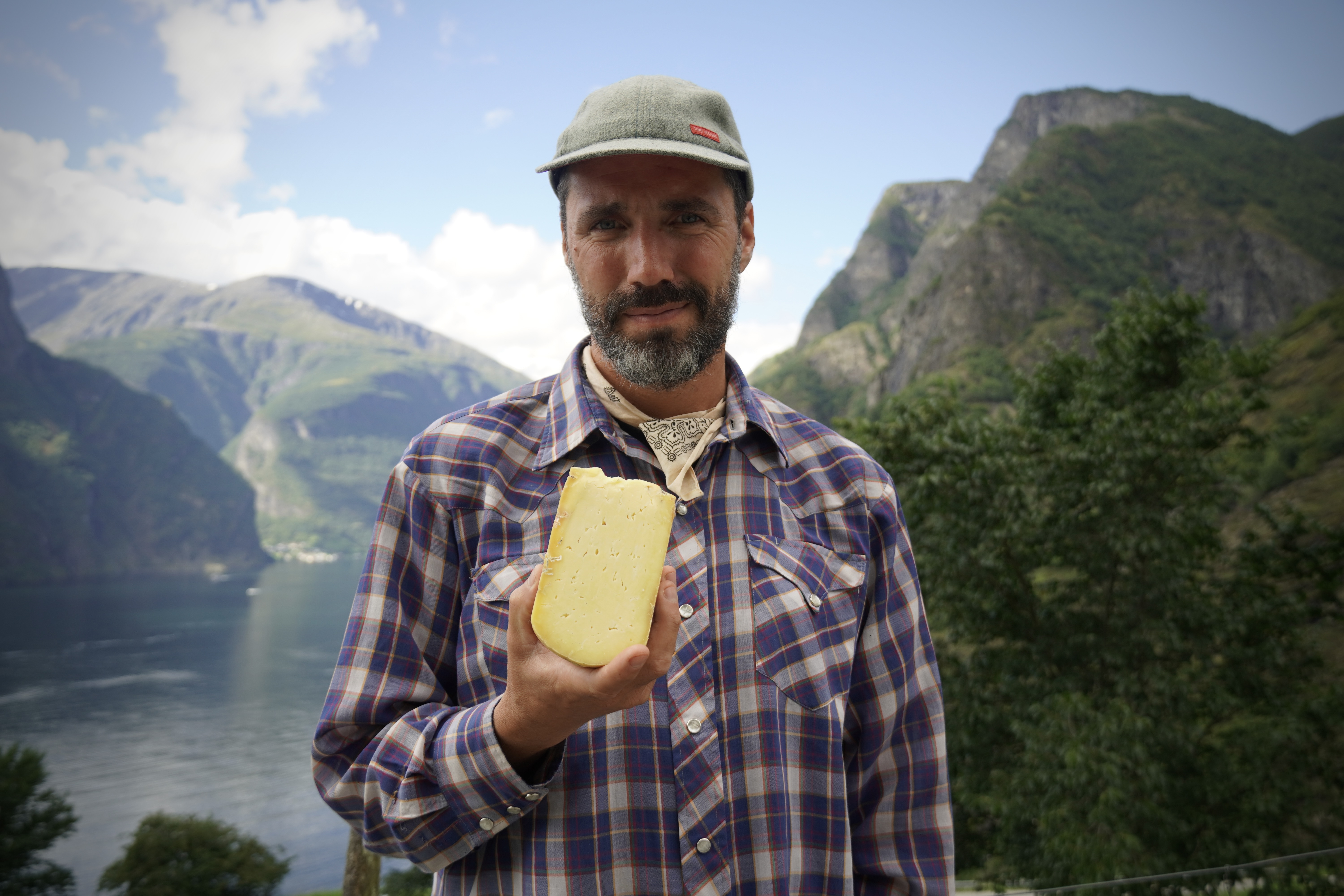
Trevor Warmedahl is author of the new and gorgeously written book, Cheese Trekking: How Microbes, Landscapes, Livestock, and Human Cultures Shape Terroir, from Chelsea Green Publishing. He’s a cheesemaker, educator, and founder of the Sour Milk School, where he teaches natural methods of milk fermentation suitable for the home, farm, restaurant, or commercial operation.
The book springs from Warmedahl’s ever-growing interest in natural, non-industrial methods, and it takes us to Mongolia, India, Norway, Italy, Austria, Slovenia, Georgia, and Spain, where we meet cheesemakers who are using practices that go back generations and result in cheeses with flavor and “terroir” far beyond anything Warmedahl had ever encountered. And the pastoralists who make them have deep connections to their land and animals, and are doing a kind of agriculture that heals the land and promotes biodiversity. Though Warmedahl doesn’t speak the language of the people he visits, he finds a non-verbal communication with them — the language of livestock and cheesemaking. The book takes us on journeys to places most of us will never visit, and describes cheeses we will never taste because they are so fundamentally local, imbedded in place and community.
He also writes about the fundamentally “sociopathic” nature of our food system, which privileges toxic mass-production above land, water, animals, people, ecosystems — and taste. His book is a reminder of the deep human connections we have always had to our food, and an aspiration to a future with healthy and natural cheeses, both new and traditional.
TIMELINE
3’06 How Trevor came to ever more natural practices of cheesemaking
4’29 the history and biological process of cheesemaking–beginning in the baby mammal’s body
6’08 “sweet” milk is a modern and unnatural thing requiring refrigeration and a lot of energy
6’48 souring, fermenting, and dehydrating milk are more common and nutritionally beneficial
7’28 milk-beer, kefir, cheese made without added “starter cultures”
9’07 “microbial imperialism”
10’37 the process of unlearning
10’58 going against received wisdom about the first squirt of milk from the udder
12’24 new ways of thinking about food safety
12’47 our broken farming system is creating a breeding ground for unwanted microbes
13’49 the importance of making cheese immediately after milking
14’35 natural filtering systems
16’39 the anti-microbial properties of nettles, and how they thrive in livestock areas
17’21 Trevor never got sick from milk or cheese when he was traveling, except in restaurants
18’42 very health grazing practices and their qualities
19’45 the importance of edge zones
22’12 reframing people as a positive influence on the planet
24’15 Trevor’s descriptions of cheese
25’33 what is “terroir” in cheese
28’54 “The people are the recipe”
30’58 the contrast between people who have been so uprooted and those who have been in one place and culture for generations, example from Albania
32’28 contract with the animals
32’56 humans learning the language of livestock
34’08 animals, as well as people, have a deep sense of their land when they’ve been there for generations
34’52 Author Fred Provenza on nutrition
35’07 Rancher Glen Elzinga, who uses Provenza’s principles
35’58 communicating with herders even though they don’t speak the same language
38’27 the artistry of cheese
41’36 is this a dying tradition?
43’05 Trevor’s optimism about the future
44’50 livestock breeds are a genetic treasure that needs to live on the landscape
46’10 gathering knowledge for when the industrial food system inevitably collapses
46’59 looking at today’s mobile pastoralists not as an antiquated lifestyle but rather as a light shining in the right direction
48’20 rationalist science and the magical/spiritual co-existing harmoniously
52’11 Quote from Martin Prechtel on healing the land and healing through land

Subscribe:
Apple Podcasts
Spotify