

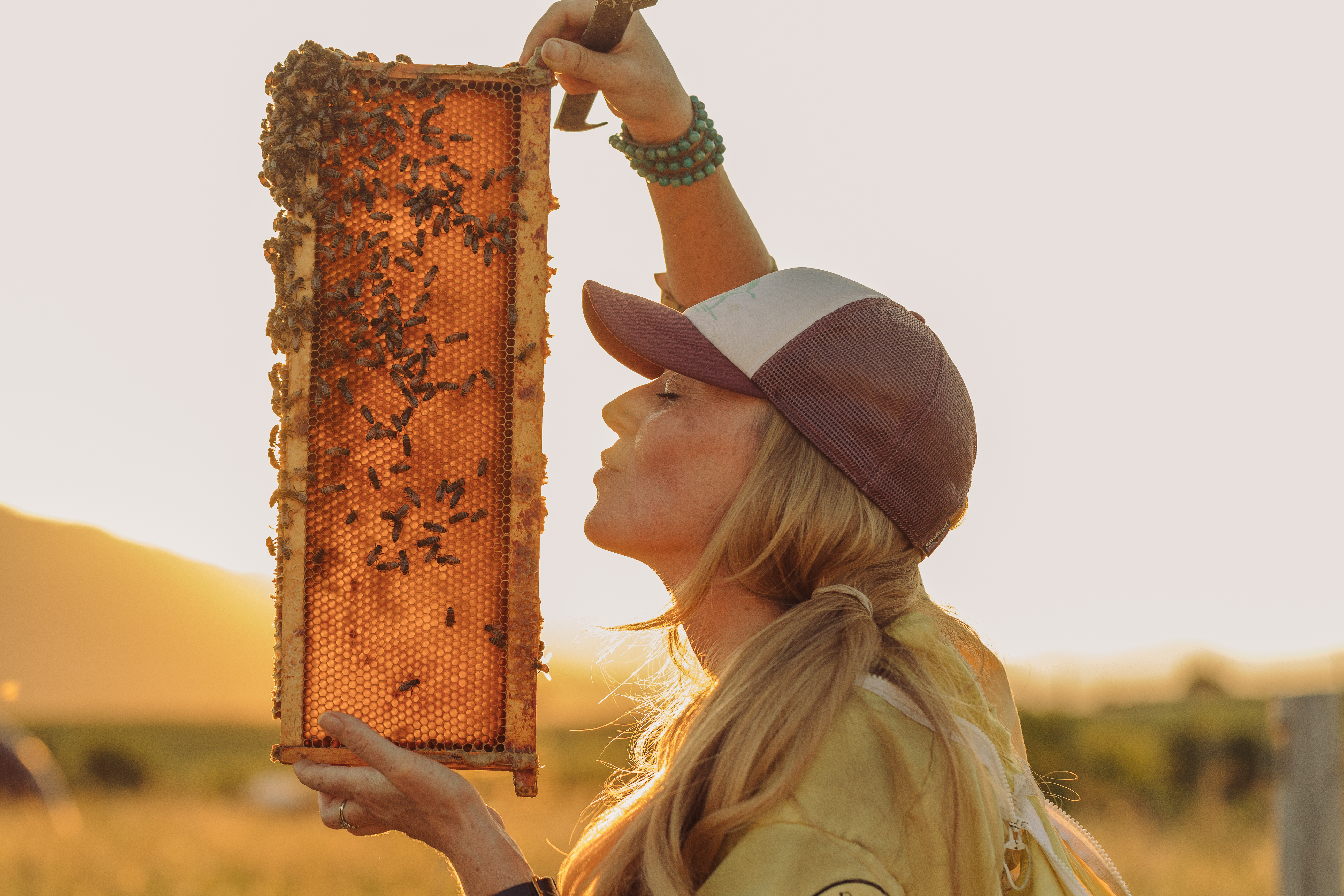
The work that bees do as pollinators is directly responsible for much of the food we eat. And yet the industrial food system is harming and killing them to the point many of our landscapes—and the food they produce—are imperiled. But it doesn’t have to be that way. Scientist, storyteller, and founder of Bee Regenerative, Sarah Red-Laird teaches bee-friendly practices, including cover-cropping, no-till, and reduction of chemical use, which help farmers and ranchers to cultivate both abundant pollinators and healthy soil. Her work includes data collection, storytelling, teaching, doing bee-retreats (beetreats), and nature-based art.
3’00 how Sarah got interested in bees
4’05 learned about colony collapse disorder form the side of a Häagen Dazs container
5’06 wanted to be a beekeeper
6’21 4000 known species of native bees in North America, and their role is pollinator
9’50 problems for bees with the industrial food system-bees cannot survive in a monoculture
11’05 almost all bees need a diverse diet, i.e. lots of different flowers–not monocultures
13’46 livestock properties are great habitat for bees
14’47 industrial bees pollinating industrial monocultures
17’18 colony collapse disorder and colony loss
18’32 the four Ps–pesticides, pests, pathogens, and poor nutrition
20’46 the best solution is building better habitat for bees on agricultural land
21’32 paradigm shift toward land stewardship
22’57 good stewardship is just as profitable as industrial, and more and more consumers want healthily-produced food
24’39 bee-friendly vineyards
26’17 adding plant diversity to the vineyard makes for better soil, healthier plants, and better grape flavor
26’52 bee habitat can cultivate beneficial insects
28’27 organizing peer-to-peer events for wine-makers
29’53 connection between bees and soil health
31’40 Sarah’s work with bees and livestock grazing
32’35 working with ranchers who are passionate about being good stewards–they belong to the land more than the land belongs to them
34’57 using her data to tell stories
35’39 eating is an agricultural act
36’48 the process of change toward regenerative agriculture through bees
38’31 another path toward change is total collapse of industrial systems
39’17 not only are ecosystems on the brink, but people are too
42’40 the influence of celebrity outdoorspeople
44’03 Bee retreats, or beetreats
44’49 getting beekeeping legalized in Southern Oregon
46’05 bee therapy
Bee photo by Boris Smokrovic on Unsplash
TIMELINE
3’00 how Sarah got interested in bees
4’05 learned about colony collapse disorder form the side of a Häagen Dazs container
5’06 wanted to be a beekeeper
6’21 4000 known species of native bees in North America, and their role is pollinator
9’50 problems for bees with the industrial food system-bees cannot survive in a monoculture
11’05 almost all bees need a diverse diet, i.e. lots of different flowers–not monocultures
13’46 livestock properties are great habitat for bees
14’47 industrial bees pollinating industrial monocultures
17’18 colony collapse disorder and colony loss
18’32 the four Ps–pesticides, pests, pathogens, and poor nutrition
20’46 the best solution is building better habitat for bees on agricultural land
21’32 paradigm shift toward land stewardship
22’57 good stewardship is just as profitable as industrial, and more and more consumers want healthily-produced food
24’39 bee-friendly vineyards
26’17 adding plant diversity to the vineyard makes for better soil, healthier plants, and better grape flavor
26’52 bee habitat can cultivate beneficial insects
28’27 organizing peer-to-peer events for wine-makers
29’53 connection between bees and soil health
31’40 Sarah’s work with bees and livestock grazing
32’35 working with ranchers who are passionate about being good stewards–they belong to the land more than the land belongs to them
34’57 using her data to tell stories
35’39 eating is an agricultural act
36’48 the process of change toward regenerative agriculture through bees
38’31 another path toward change is total collapse of industrial systems
39’17 not only are ecosystems on the brink, but people are too
42’40 the influence of celebrity outdoorspeople
44’03 Bee retreats, or beetreats
44’49 getting beekeeping legalized in Southern Oregon
46’05 bee therapy

Subscribe:
Apple Podcasts
Spotify