

At this year’s Regenerate Conference, I had the privilege of hosting a panel of three young agrarians who are building resilience on the land and serving as models for how to build on tradition for a more resilient and healthy future for food, land, and people. The panelists are:
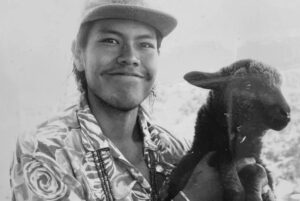
Tyrrell Tapaha, shepherd and sixth generation weaver and award-winning textile artist who grew up on the Navajo Nation
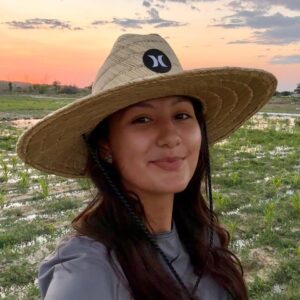
Kiera McCabe, Navajo farmer and entrepreneur, founder of Skoden farm, she received the 2026 “Growing the Future” Award for new or young farmers and ranchers from the State of New Mexico
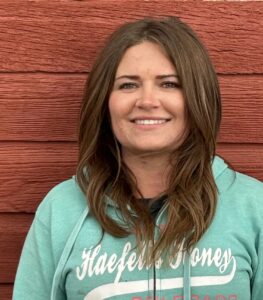
Morgan Neely, fifth generation farmer in the San Luis Valley in Colorado, project manager for the Rye Resurgence Project
TRANSCRIPT:
Nina Katz: The first farmer that we have in this panel is Kiara McCabe, a Diné farmer and founder of Skoden Farm, is dedicated to growing traditional foods that nourish and sustain her community as a beginner farmer with three years of hands-on field experience. Her work is deeply rooted in who she is and where she comes from. Kiara recently graduated from Fort Lewis College with a bachelor’s in sociology and human services alongside minors in business administration and Native American and indigenous studies and a certificate in regenerative food systems. A massive turning point in her journey was participating in the 2024 Bitty Baty Foods Farmer in Residence Program. This was an incredible opportunity that allowed her to learn, grow, and build the foundation for her farming operation. She now operates her 2.5 acre farm in Aztec, New Mexico and provides internship opportunities.
Next, we have Morgan Neely who was raised on a small family farm in the San Luis Valley. This began her love for water and appreciation for agriculture. Her participation in 4-H further developed her personal connection to ag while highlighting the importance of leadership and civic engagement in rural communities. Her previous work with USDA has emphasized the importance of agriculture to her life, and she is thrilled to continue it through the Rye Resurgence Project. In addition to stepping more into the operations of her family farm as the fifth generation, she looks forward to working to help preserve the agricultural way of life in the San Luis Valley and to build the strong, resilient farms and communities for the future.
And finally, we have Tyrrell Tapaha, a Diné Weaver and five artists from Goat Springs, Arizona. Their work encompasses the intergenerational pastoral living handed down through Tapaha’s grandfather, great-grandmother, and other relatives willing to teach. Tapaha produces woven textiles and felted objects, for both aesthetic and utilitarian uses. (02:07): These textiles are made with raw natural fibers predominantly grown on the Navajo Nation and hand-dyed with local flora from the Four Corners region. Tapaha’s weavings are tied to a life lived and intimately interwoven with feelings, memories, and experiences. In addition to their fiber and textile work, Tapaha also works full-time as a sheep herder in the Four Corners region of the Navajo Nation. Please help me in welcoming all four of these folks to the stage.
Mary-Charlotte Domandi (02:38): It’s such an honor to be here with these amazing people who are doing just incredible work, which you will hear about. So we’ve done introductions, but I also want to say that everybody’s on Instagram @tyrelltapaha, @skodenfarm, @ryeresurgence. So after this, if you want to follow up, there’s a lot more to learn. I thought we could start with Tyrell. You do something, I mean, okay, everyone’s heard of farm to table. You do something that you call sheep to loom. You are what, a fifth generation, sixth generation weaver and textile artist whose work is in museums. You grew up in the Navajo Nation. Tell us about, I mean, this is about preserving heritage crops and livestock. Tell us about the churro sheep that you work with.
Tyrrell Tapaha (03:27): Sweet. For those who don’t know, Navajo Turo, first domesticated sheep route over to the Americas via Spain. And I think an interesting thing about the current phenotypes of churro is that I think when we think about domestication within livestock breeds, we think of it as this kind of lone standing characteristics that we can put into one animal, but churro is essentially like a mutt. So it had a handful, I think upwards of nine different types of breeds that were all kind of isolated within the greater Spain. And so when they brought them over, people, depending on what their usage were on meat, fiber, because textile production in the Southwest has always been quite a hub, that we, Navajos as well as a lot of Spanish colonists here in New Mexico had kind of streamlined the breed into a handful of phenotypes. Some of the qualities are we have a lot of different types of color patterns, coat patterns, generally really hardy and really great for, or what do we say, drought tolerant.
Tyrrell (04:34): And they’re a popular topic nowadays. I think they’re a really popular breed and there’s a lot of people who are interested in having them. My family has had them for at least, I think that’s where the sixth generation of my title kind of comes from is both weaving as well as specifically having the sheep to loom as part of the practice. So yeah, it’s always been around me. I’ve always had it in my family and down into my daily production within my work as a weaver. I process and dye pretty much all of my yarn for my pieces. So at least on a smaller scale outside of the sheep being their own operation, that’s at least my personal relationship to the breed itself.
MCD (05:16): So you have a background in forestry and ecology, and I was wondering how that particular education on top of what you learned from many generations of people in your family and of Navajo people, how did that contribute to how you raise your flock, how you think about genetics and what you’re doing?
Tyrrell (05:39): Sweet. Couple notes. First off, forestry and contemporary forestry as a study, and particularly within this country, has been over 200 years of guessing and checking. And so it’s really fun to have that as part of my education background, but also know that every class had fine print of this is what we know now. It’s always been up in the air up until recently. And so what I really like about that is coming from a lineage of my operation is free range herding, so we’re pretty much everywhere and nowhere most days of the week. So you see a lot of different environments. I live in the San Juan River Valley, so our absolute winter camp is maybe a mile south of the San Juan River, and then that’s maybe at 5,000 feet. And then our absolute summer camp on top of the mountain is at 8,600.
Tyrrell (06:34): So there’s a lot of different biomes and diversity that happen that we see every day. And I think stewardship is inherently tied into being a sheep herder, being able to understand the ecosystem, where the water sources are, how much you’re using and your impact are, and how that affects your overall practice. So at least that’s something that comes to mind when I mash those two parts of myself together. But I think I’ll always see myself as a sheep herder first. I don’t think it’s a title I really held onto until recently, but I think about that in terms of just my perception of space as well as my relationship to the area that I’m in, is that I’m always thinking about the flock, how our impact is in the area and how we can better each other. It’s a pretty longstanding thing, at least within Navajo people.
Tyrrell (07:19): We’ve always been sheep herders.
MCD (07:22): So for the art and weaving that you do, does that all come from your sheep?
Tyrrell (07:28): A large amount. I think recently, and particularly the large piece
MCD (07:31): That
Tyrrell (07:32): I’m working on now, it’s a mix of my hand spun yarn as well as dead stock vintage yarn that was gifted to me. So being able to play around, it’s fun. But as a producer, admittedly, I think a lot of sheep producers can empathize, but the wool industry in this country is not as prime as it was, especially unfortunately wartime really kept that industry going. But at least currently there’s a deficit for it. So Navajo Churro, both in meat and in wool, occupy a niche market in that way. So there’s a handful of avenues you can do. Education’s always a route that we end up going to open the door and to bring people into the breed. But yeah.
MCD (08:12): I mean, is the deficit of demand for wool, is that because of polyester and other synthetic fabrics?
Tyrrell (08:20): Synthetic, but also Navajo Churro is a unique breed in that it’s a heritage breed one, so it’s a lot more related to its ancestral traits. So it’s a dual coated fiber, has a Downey undercoat and then a long outer guard hair. So it’s great for textiles and the work that I do as an artist, but it does have limitations in commercial applications because most mills in this country, if there are any still around, some of them are in and out, but you have to have a specific staple length on your fiber in order for the machines to actually mill it properly. So that’s one factor. Also, Navajo Nation and I think just the greater West, their relationship with sheep, we don’t take care of our animals as best as we probably should. So that’s another added barrier that really stops a lot of people from getting their wool processed at a mill.
MCD (09:16): What do you mean you don’t take –
Tyrrell (09:18): It’s dirty. We live in the desert. It’s windy. Our wintertime is just constant wind and dirt. And because I’m free range herding trees, leaf debris, vegetable matter, that’s all a factor that goes into how we maintain our flocks. There’s no shortcuts in working livestock, but specifically with sheep and having free range herding is the pinnacle of my practice. It’s an everyday hands-on thing that I can do it by myself and I have been running my family’s operation by myself for the past couple years. Yeah, I’m human and I have flaws, so clean space and protecting the wool is a really hard trial.
MCD (10:00): So Keira, let’s hear about your story. You had a childhood where you were in a lot of different places and then you decided that you wanted to really stay in one place, get on the land, you were growing heritage or heirloom corn. You’ve already won the 2026 Growing the Future Award for new young farmers. Tell us about, first of all, how you made that decision and what you’re doing.
Keira McCabe (10:32): Yeah, I did not grow up in agriculture at all. I didn’t think I would be a farmer until a couple years ago. What really sparked my journey is with COVID, I saw how much our food system, it got wrecked and I wanted to learn how to be self-sufficient. And that’s when I did the old Fort program at Fort Lewis College. And from there I wanted to learn how do I go back and farm on tribal land? There’s so many different barriers there, and that’s when I sought out the Bitty Baby Foods Farmer Residence Program. I was in their first cohort and they really taught me how important it is to continue to grow our heirloom corn. And they exposed me in a lot of conferences and I realized there was a lack of young people really passionate about starting their own operations and continuing this because it does contribute a lot to our culture and it’s critical for it to survive.
MCD (11:40): Tell us about the corn that you’re working with. What is it like? How is it adapted to the land?
Keira (11:50): Our seeds are very special. They’re very drought tolerant. We have lived through drought before. This is not new to us. So I have a lot of faith in my seeds that this is a hard time, but it’s not something they’ve gone through before. So I currently grow Navajo white corn and blue corn. I learned how to steam from Zachariah Ben at Bitty Baby Foods. Yeah, it’s been a great journey.
MCD (12:21): It’s funny when you’re in a context like Kiviera, you sort of think everyone is a young entrepreneurial farmer, but it’s like so few people are actually doing it. Zach from Bitty Baby Food was here last year. We had him on Down to Earth as well. It’s important to have somebody to learn from.
Keira (12:43): Oh yeah, definitely. He’s been a great mentor and so has his wife with teaching me a lot of the business skills. I didn’t realize when you go into farming that you got to do all that paperwork stuff and the grant writing and yeah, they’ve been great mentors. And even just the community here, being at this conference, I’ve seen a lot of my friends that have supported me along the way and they continue to encourage me and I’m full to have them.
MCD (13:15): So what is the product that you’re making or hoping to make?
Keira (13:22): So I would like to create Skoden. So that’s kind of the play on why I named my farm Skoden Farm. During my time in the farmer residence program, we were working hard all day. You didn’t really have much of a kitchen at all. And most of the time we’re just so exhausted that we’d end up eating whatever we could find at the grocery store, just junk food and fast food, McDonald’s. But it was just kind of ironic because we’re growing traditional foods and we’re talking about how critical it is that you consume it. And I want to create a snack that’s on the go that has blue corn or white corn in it. So yeah, the product development is still undergoing, but I’m officially one year into my business, so it’s still very new. So that’s my goal.
MCD (14:19): Do you hope to distribute primarily to Navajo people on the Navajo Nation or get a market outside of that or both?
Keira (14:28): I want to focus more on Navajo Nation first and then other tribal nations. There’s been other product lines kind of similar to my idea, but it’s not with the corn. Usually I’ve seen it with bison, which is a really Tonka Bar, if anyone has heard of it, but they were really inspiring to see something on the go.
MCD (14:53): Morgan, so you are in the San Luis Valley. You are a fifth generation farmer there and you were doing something, and if anybody listened to the last episode of Down to Earth, you heard about the rye resurgence project, and it is such a fascinating project to me. People have been growing rye in the San Luis Valley as a cover crop, but you’re really talking about making it into a cash crop. What’s going on?
Morgan Neely (15:18): Well, everywhere in agriculture is facing a drought pretty much, especially in the west. And we started looking at how are we going to keep our community farming going forward and what kind of crops do we need to implement in order to be able to continue farming on our land? And so in the valley, we predominantly grow potatoes, alfalfa, and barley for cores. And we started looking at our heritage and crops that we’ve traditionally grown. And one of those that we grow for soil health is rye, and it uses one half to one third of the water that our other crops are using. So we started looking forward to why aren’t we using this as a cash crop? Why is this only a cover crop for soil health benefits? And it’s because there’s not a large demand for rye grain in the United States. And so we decided to get grant funding to grow the market for San Luis Valley rye.
Morgan (16:12): And while we started doing that, we realized all of the soil health benefits as well as the nutritional benefits, and that led us down the rabbit hole of why were heritage grains good to begin with? Why did we step away from them? And how can we re-implement them for the benefit of humans and the soil and profit?
MCD (16:32): So tell us really how rye nourishes soil health. It’s not just one thing.
Morgan (16:39): Rye is allelopathic, so it will out compete anything that it’s growing with. And so if you have a massive weed problem, which a lot of organic farming does have, then you can plant rye and the following year your crop won’t have as many weeds as it did. It’s also known as a nitrogen scavenger. And so other crops that leave an excess of nitrogen in your soil, rye will go through and break that down and apply it differently. And then we also have a nematode problem with potatoes. Anytime you’re growing potatoes, your nematodes are going to get out of control and you’re going to have a problem eventually. And we’re doing trials. All of the old farmers say that rye helps with nematodes, and we’re now doing studies with CSU to back up that with science.
MCD (17:25): It’s also the cover crop aspect of it in terms of keeping the soil moist and keeping it cool in the summer and so on. So it’s very much of a water saving crop.
Morgan (17:39): It does use less water. It’s also a fall planted crop. So we plant it in the fall after potato harvest or barley harvest, and then it takes a living root through the winter. And in the spring when we have 60 mile an hour winds, it helps keep the topsoil down. On the west end of the valley, we’re very lucky. We don’t have dust storms, but on the opposite side, once the wind has gone all the way through, that’s where the great sand dunes are, all of that is from wind erosion. And so having rye on the fields prevents dust storms as well.
MCD (18:13): And you’ve got pictures on your website of dust storms that look like the dust bowl.
Morgan (18:19): We do. We’ve actually had school canceled before because it was too dangerous to go out in the windstorms. We’ve also had times when parents weren’t allowed to pick up their kids for three hours after school because it was too dangerous. So the rye is really beneficial to helping keep the topsoil down. And when you’re not losing your topsoil, you can have better organic matter and better nutrients organically and regeneratively because it’s not blowing away every spring.
MCD (18:48): I mean, when the wind picks up, are you seeing that the rye fields are not blowing away and then other farms around it are?
Morgan (18:57): Yes. And we do have videos on our website and on our Instagram that shows a rye field in the spring and all of the other fields around it. And the difference is insane. On the rye field, you can see the cows across the field and on all the others you’re in a complete brownout and you can’t see the front of your vehicle.
MCD (19:16): What are some of the products that you can make from rye?
Morgan (19:20): Rye is amazingly versatile. One of the biggest misconceptions is rye bread, and people think that rye has a very strong flavor. That is completely untrue. It’s just on what spices you pair it with on what flavors it brings out. So you can have an extremely mild rye sourdough bread and it’s not going to taste anything like what you think traditional rye bread would taste like.
MCD (19:43): Because they put caraway seeds.
Morgan (19:45): They do. They put caraway seeds and some other spices in for that strong flavor profile. So rye makes amazing brownies, it makes amazing cookies. You can put it in bread. It is higher in fiber and protein and lower in gluten. So we currently have research going at CSU to see that when you combine rye with sourdough, you get a residual gluten instead of an active gluten so people with an intolerance can consume it without any problems. We also have found that rye is a great skincare exfoliator because it exfoliates without damaging the skin barrier. So you can have bread, whiskey, beer, skincare, I mean anything.
MCD (20:28): Cookies.
Morgan (20:28): Cookies, brownies. We’re working on a gin.
MCD (20:32): Oh, pizza too.
Morgan (20:34): It’s great in pizza dough. We have two pizzerias in Colorado that are using it. And on our website, we have a list of active partners. We actually have several partners here in New Mexico as well, and you can find where you can buy rye products that were grown regeneratively in the San Luis Valley.
MCD (20:53): Tyrell, let’s go back to you and your work and your sheep. You were telling me the other day that you were a young person in your 20s and a lot of the other people doing this kind of work are a lot older. What do you see in terms of the interest of doing the kind of herding and spinning and working with wool and being a weaver and being an artist that you are doing, you’re carrying this on? Is there a lot of that? Are you alone?
Tyrrell (21:26): I don’t think I’m alone. I do think that the specific model that I’m working with my flock is definitely rare. There’s no shortage of weavers, I can say that. That will be here for a long time, but there is a shortage of weavers who are processing their fiber from sheep to loom and having that as an integral pillar in their practice. So as well as, I mean, with the older generation that I pull a lot of my teachings from and understudied under, that’s the model and the baseline for production, as well as once you start processing and refining your own skills in production, it’s really hard to go back to commercial yarns because it’s never going to be top tier. But I keep my lives separate despite… The sheep is an everyday obligation and a siphon for all my time as is most ranching. And then the weaving kind of is my off-season winner type of production, but that’s at least personally where my breadwinning comes from.
Tyrrell (22:30): And then the sheep, I’m trying to get to a more self-sustaining model right now that the sheep have their own account. They pay for their own feed and they take care of themselves. I’m just the hands for moving them. But the deficit that I see in my practice and in the line of work I’m doing is that it requires a lot of time obligation. I think in the strange times that we’re in nowadays, it’s really hard to give yourself to something fully and effectively and have, as any type of livestock operation or agriculture, you don’t get a quick turnaround or any type of affirmation really. And that’s really deterring. It’s hard. I think as a young person, I’m just inherently impatient about it. But given that I’m picking up the model and I’m in a generational situation, I really lean into a lot of the practices that I learned growing up and that I saw.
Tyrrell (23:23): And then of course having great mentors really helps. But like what we had shared earlier, at least in my community and my region of Northern Navajo, I’m for sure the youngest sheep producer that is doing this practice full-heartedly. There’s a lot of people who have sheep and that’s really common, but there’s a difference between owning livestock and working livestock. And so that’s the thing that I see is really critical, not only in a cultural sense, but also land stewardship, having producers and specifically on Navajo Nation hold themselves accountable on their environmental impacts because it’s odd times and dry times that we’re in that we need to really put that in the forefront of not only just basic infrastructure and community infrastructure, but also how we look at the range as a whole and our impact on that.
MCD (24:15): So you talked about having mentors. What is the role of mentors in your life? Was there one person in particular or various people?
Tyrrell (24:25): I think it’s always been… Ranching’s been in my blood. So whether I care to acknowledge it sooner or later, that’s just the reality of the environment I was raised in. And I think that that type of upbringing and the people that I’m learning from my relatives or just community members, that’s all I’ve ever done, and they’re very true to who they are. And it’s really hard to… Hardworking is made, they’re not born with it. And I see that in a lot of the mentors that I’ve had growing up, but I specifically would give credit to Roy Katie. He’s my grand uncle, and I’m essentially an heir to the operation that he’s been holding down for a good second. After my great-grandma passed, it went to him, and then it kind of was up in the air of what was going to happen next. We just had employed a lot of herders and often non-Navajo herders to come and learn and work for rent situations, and that’s been great in terms of just community building and networking, but no one up until myself was going to take that on because I’ve been sharing this a lot with a handful of people in the room, but I’m really excited about getting a new corral built.
Tyrrell (25:42): That’s great infrastructure, basic infrastructure, and most people, and I’m sure a lot of Navajos in the room can empathize, but our corrals are often 40 years of band-aids. It’s really hard to develop and to get an operation to be self-sufficient and just a siphon for time. And that’s really hard to do, not only in the context of rural spaces, but also time. That’s our limiting factor. I’m pouring an insane amount of my daily life into that, and I’d have it no other way. That’s personally what I’d be spending my time doing, but it creates unique trials, and if anything is often a deterrent for outsiders coming in or even within my own people finding who’s next, what’s going to happen after this, because I at least can vouch that this will last my lifetime, but what happens after me?
MCD (26:34): Well, exactly. I mean, you talk about having mentors and you’re a young person, but how do you get that next generation of people interested in this kind of work?
Tyrrell (26:45): I haven’t figured it out. I know it’s… Yeah, it’s hard. One of my favorite workshops was the first aid. As we were going through all the things that happened or just in field dressing or whatever it may be, I was like, oh, I’ve done most of these, unfortunately, unfortunately. And I don’t know. I think my generation, the time we’re in, social media is a thing. Technology’s just in every corner and pocket right now that there has to be a unique solution. There has to be something that has to change because at least the model itself of sheep herding, if it ain’t broke, don’t fix it. But I think we’re at that kind of crux where something has to change, whether that’s on a governmental level or a legislative level, because Navajo Nation operates off of land use permits. So in technicalities, you’re really only supposed to have livestock if you have a permit like that.
Tyrrell (27:39): My family’s never had a grazing permit, but we’re the only family in our community that has sheep that actively herds them daily. So something has to move. I think as I progress in my practice and refining what I’m working on, the answer will be a little more obvious, but at least right now it’s kind of just shoulder on the wheel.
MCD (28:03): Keira, you did a farmer in residence and then you got on land, and one of the big conversations that we’re always having in Quivira is about land access. How did you access land, which is probably different on the Navajo Nation than it is in other places around it, and what was that land like?
Keira (28:23): So last year was my first sublease experience. Zach Ben helped me make that connection with a community member in Shiprock. It was five acres of idle land that hadn’t been farmed in about 10 years. Everyone in Shiprock kept passing and knew nothing was going to happen to it, but I just got the sublease for the season, just the season, and don’t do that. Don’t just do it for one year. And that was okay. He wasn’t fully honest on the irrigation issues. The irrigation line wasn’t maintained. It was full of mud, so we had to cut into the system. But with every issue you run into, I learned how to cut into an irrigation system. But from there, I knew… Well, that season was really hard last summer in Shiprock with our water.
Keira (29:25): So the river was really low, and we only had a pump to supply our whole area, and it just kept getting filled with silt, so they would shut it off without telling us, and it was just sort of a struggle, and I would have to haul water on a gooseneck, like big old white drums. I had eight of those and did multiple trips throughout the day. I was like, “I’m not going to do this next year. This is not sustainable.” So I decided that I need to move up river even Though it was going to be off tribal land, I’m now in Aztec, New Mexico, which is not too far from Navajo Nation, but I currently have a two acre sublease from NMSU. It’s county land just for this season, but I have another two acre plot from a community member. I have a few other leads on other community members that want to sublease in Shiprock.
Keira (30:28): I asked at a farmer’s market like, “Hey, do you know anyone?” He’s like, “Yeah, I know some elders in this community that are willing to, or they have neighbors that they just have land sitting there.” So it’s just starting the conversation, who knows someone? And then someone else overheard that conversation was like, “Hey, my parents, they sublease land. We use it for cattle, but if you are interested in farming, I could talk to them.” What I’ve noticed in the conference is say it out loud and manifest it and just show up and tell people your story and they’ll believe in you and they’ll say, “Hey, I got some land, even if it’s not much, just get on the land and work and do what you’re passionate about.”
MCD (31:21): What is your vision for five years from now? I mean, we heard a wonderful speaker yesterday who was talking about leasing land and that is a way to get access. And if you improve the land, then they want to keep you there and so on. What would that look like for you to have the situation that would be most conducive for your life, for your product?
Keira (31:48): My five-year plan is to continue subleasing. I have already gone to USDA office and talked to them about, hey, what I need for a loan, even though that’s way far down the line, but I need to prepare my financial projections to show that I’m willing to take the risk on for a land loan. That’s the goal. Maybe not in five years, but every year is a test of how much I can grow an acreage and produce more and make a sustainable operation.
MCD (32:26): Morgan, the rye resurgence project is dependent on not just being able to grow rye and having healthy soil and all that, but it’s dependent first and foremost on having markets for the products, well, for the rye itself and then people making products from it. How do you actually go about doing that?
Morgan (32:49): That’s the hardest part. Farmers can’t grow something if they can’t sell it and get an income from that. And that’s been the whole journey of the rye resurgence project. We’re on year three and we’re funded for another three. And we’re learning that it’s not necessarily the consumers that we need to educate, it’s the buyers. So all of the value add market, the malters and the millers and the distillers, they’re all on board. And a lot of the community that we talk to is willing to buy that. But in order to move the needle for large scale agriculture, we need Whole Foods and General Mills and Kroger to all come to the table and start buying. And that’s where the disconnect is. It’s not between consumers and producers, it’s the buyers at big CPG companies. And so we’re learning how to talk to them, how to get their attention and how to make them care what they’re purchasing.
MCD (33:44): And is organic a piece of what you’re doing?
Morgan (33:49): We do have organic certified farms. Rye has not been bred as much as other crops, and so it doesn’t have any inputs. So all of our rye is grown with regenerative organic farming practices, but not all of it’s on an organic certified farm or regenerative certified farm because we still need the large scale commercial conventional producers to come to the table and we still need them to have a viable option to produce that crop.
MCD (34:18): You were talking about how it improves the soil for other crops like potatoes or whatever. Are the fields… I don’t know the right words. Are people sharing the fields like growing rye and then growing potatoes and then growing other things or how does that work?
Morgan (34:34): Typically, a farmer will have anywhere from a three-year to nine-year crop rotation in our region. So if they have potatoes in that field one year, they probably won’t have it in there for another two to three years or longer. Longer you have a specific crop out, the more benefits you can have. A lot of the alfalfa farmers are on a six-year rotation, so they have alfalfa in there for five to six years and then they switch into a different crop. Our goal is to have every farmer be able to utilize this within their own personal rotation.
MCD (35:09): The aquifer where you are has been going down precipitously. What do you think? Have people been doing the math, the calculation for the effect of rye on helping to replenish the aquifer?
Morgan (35:22): Yes. So that was the main goal was how much water we could save. In just three years with only 10 farms having rye in their rotation, we’ve saved over 11,000 acre feet of water. So that’s basically if you take a football field, put a foot of water on it and then times that by 11,000. That’s how much water we’ve been able to save just by having rye implemented in 10 farmers’ rotation. We have over 160 farms in active production, and so if everyone could have it in their rotation, we would have a better outlook on water. Unfortunately, in 2001 when the big drought hit for us, we did come up with water plans and if Mother Nature had produced in the winter like she historically had, we wouldn’t have an aquifer problem, but of course we couldn’t predict that this would be a 26-year grid drought.
Morgan (36:16): The plan was set up to work. The farmers did what they were meant to. The plan has still failed, and so now we’re trying to figure out how do we go forward with this new normal.
MCD (36:27): Okay. Well, actually just wanted to turn it over to the three of you if there’s things you want to say before we go to the Q&A. Well, okay. Then I have another question for you, Keira. You had talked about how in COVID we all saw all over the country the problem with supply chains and the problem with the industrial food system, and you were talking about self-sufficiency. How do you think about self-sufficiency?
Keira (36:55): I think of self-sufficiency is being able to provide yourself with your own… Having that knowledge of knowing how to grow your own food, how to take care of your own livestock.
MCD (37:08): So what does self-sufficiency mean? I mean, I think about does it mean for the state of New Mexico, New Mexico, something like imports 95% of its food and exports 95% of its agricultural production, which seems insane, but a lot of states are like that too, and countries are like that. So what is the scale for thinking about self-sufficiency?
Keira (37:33): Just being able to support and contribute to community is how I see it. And for myself, it’s taking care of yourself and making sure that you’re in a good state to be able to show up every day to produce food, to take care of your livestock.
MCD (37:55): And taking care of ourselves is a theme that I think every single one of us has to deal with all the time. I think it’s a good time to go to Q&A. Do we have any questions from the audience?
Nina (38:06): Who’s got a question? Soch.
Xochitl Torres Small (38:09): Thank you so much. There were so many common themes for each of you, and one of the things I felt like I heard each of you say is that the market is a fundamental part of what you are doing, figuring out what the end product is and how you’re using that to connect with others. I’d love to hear some of the challenges that you’ve seen with finding that right market that fits the niche of the work that you were doing to preserve these heritage crops and livestock.
Tyrrell (38:38): Mine’s short and sweet. I really lean into, as I said earlier, Churro and Angora occupy a niche market. So I feel like those avenues are kind of set and it’s just dependent on if you want your production to go that route. I’ve been getting meat processed USDA approved recently and fun experience. I like it, but I don’t think I would’ve gone that route if I didn’t already have a queue of people, restaurants that they’re going to. And then wool is just an inherent byproduct, so that feels like an obvious route to… You can diversify on your own right, but generally as a weaver and fiber artist, I’m like, “I’d like to raise good quality fiber that I can use and would want to use.”
Morgan (39:20): I think for us, the niche market is our favorite market and we love it, but what we need is the large scale market. In my region, the smallest farm is probably 500 acres, and so we’re producing a lot of crop, and in order to move the needle, we really need the big CPG Walmart bread to come to the table. And so getting in with the big companies has been our biggest obstacle because the niche market’s great. They care and they’re ready to do it, and it’s the big market that sucks.
Keira (39:53): For me, I am very happy to be a New Mexico producer. New Mexico really does support small regenerative agriculture very well. With the New Mexico Grown program, they’ve been able to put state funds into a program that will allow local producers to provide a food banks, school districts, nursing homes, and they also have… It’s a pilot program right now, but it provides food to BIA schools. So that’s amazing program. It’s still a pilot, so we need more farmers and ranchers to get into this program if you’re New Mexico. I mean, my family’s from Arizona and I was hoping to go farm over there, but Arizona, they don’t support as much as New Mexico. I’m on the border of Colorado. I’m only eight minutes, but I still always want to farm here in New Mexico just because of all the support.
Audience member (41:02): Right here. Can you hear me now? Okay. Thank you all so much for sharing your experiences. One of the questions that I had for you as far as the market side of things is do you provide, Tyrell, in your situation, your processed wool that you’ve been doing or for Morgan and Kiara seeds to direct to consumer? Is that something that you’ve considered on a small scale to do either within your communities or mail order for people who might be interested in gaining access to these heirloom products to perpetuate their own crafts or their own farming?
Nina (41:40): The question was, are you like, Tyrell, would you sell your own wool and then seeds?
Tyrrell (41:51): Yes. I have a lot of wool, maybe too much wool. I’d like to see it go somewhere. I’d like, again, to emphasize, I would personally like my operation to take care of itself. So if they can fund that via just a byproduct, perfect. Otherwise, yeah, I’ll chip away at X amount, but realistically, I always have an abundance.
Morgan (42:14): We typically sell just the rye berry and then it goes to a miller or a malter. There are several varieties of seed that are commonly protected, and so you have to buy them from certified seed. Thankfully, all of the varieties that we use in the valley, they’re not protected, so we can sell them for seed or use them for seed the next year by ourselves, but that’s definitely something to look into when you’re looking at heritage grains and you buy a heritage grain and you produce a crop and then your neighbor wants some and you’re like, “Oh yeah, I’ll just give you some.” Always check that the variety is not protected because you can get in a lot of legal trouble by distributing, whether you know it or not, a protected variety. So always check that.
Nina (43:00): Anyone else? Question, comment?
Audience member (43:04): Hi, I had a question for Morgan specifically. You were saying you’ve been having some trouble getting traction with these larger buyers, but I’m wondering if you’ve had any success and what has caught their interest, if anything, in terms of what you’re offering? Just trying to understand if there’s any interest from these larger brands and in what sense are you getting traction with them?
Morgan (43:33): We have had some success. We are learning that big companies have ESGs, which are environmental and social goals that they have to hit, and a lot of big companies will pay a lot of money to go plant trees somewhere or do some kind of environmental goal to hit that. The water savings with our variety hits their ESGs, and that’s kind of a marketing standpoint from them. We’re learning that telling the story and having a feel good part of it attached to their ESG is helping with the sustainability team. We have had some successes. We do have a very big company that we’ve been meeting with for the last couple years. I’m hoping that I can announce who they are in the next year with a very large contract with them, but they have been having us go through a lot of different trials on we have to do all of the R&D with their products.
Morgan (44:31): It’s turning into a money game on who has the money to do the R&D to work with this product to say, “If you put 5% rye into your daily bread, it’ll hit these ESG goals, and then you can also have this money component and the flavor won’t change and the texture won’t change.” So hopefully we have had some successes. We do have Whole Foods, we have potatoes and other grains in Whole Foods, but hopefully we will have one of the biggest CBG companies in America in contract next year and if we do all of you will hear about it. We will scream it from the rooftops.
Nina: OK I think that’s just about all the time we have, though I want to know from everyone in the audience what potentially heirloom crops and livestock you might be working with in your own life, but for the sake of time let’s pause the conversation there. So let’s give a round of our applause to our panel.

Subscribe:
Apple Podcasts
Spotify