

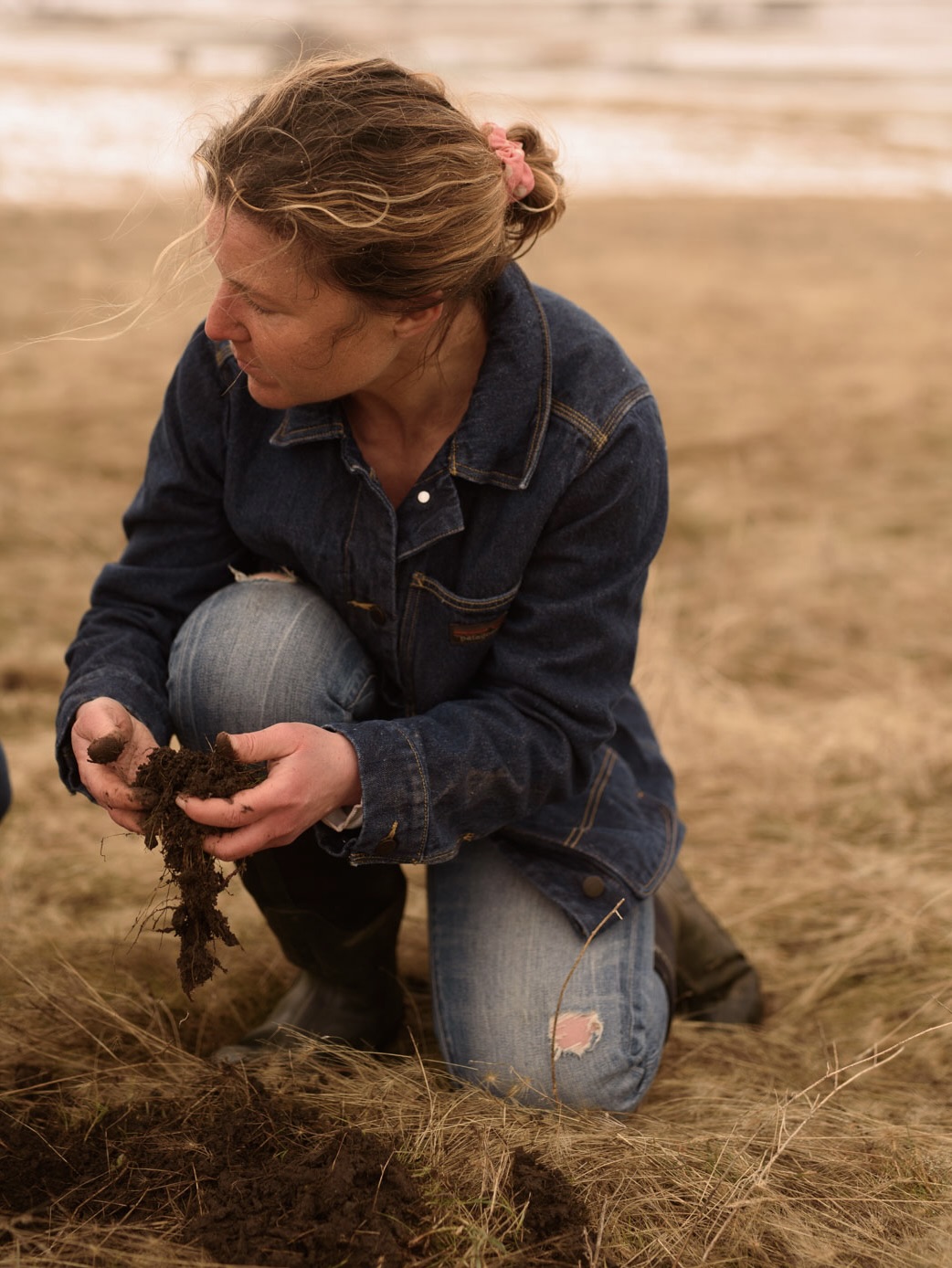
Mimi Casteel grew up on a vineyard in northwestern Oregon, where her family made wine as much for the passion as for the livelihood. She left home to study forestry and worked as a botanist for the forest service, but the pull of agriculture brought her back to the family farm, where she introduced regenerative practices and eventually started her own vineyard, Hope Well Wine.
For Casteel, the practice of wine-making begins with the land—a complex ecosystem teeming with wildlife, cover crops, and livestock—all of which contribute to healthy soil. That soil is the basis for robustly healthy vines, which keep pests in balance without the use of chemicals, and keep the ground cool in the heat, warm in the cold, and resilient in the face of droughts and floods.
Casteel is a scientist, a close observer of nature whose perspective pushes the limits of science, and an artist in the millennia-old tradition of wine-making. She’s also a passionate advocate for regenerative agriculture and regional food systems.
TIMELINE
1’58 childhood on a vineyard in Oregon surrounded by wild forest
5’52 studying forestry and getting a scientific perspective
7’45 returning home to the family vineyard
9’43 asking new questions about how to farm once she came back from the forest service
11’02 her vision of “terroir” as tied to the ecosystem
13’41 starting her own vineyard
15’42 putting into place good soil management practices with a great diversity of life, including no-till, which was controversial in viticulture at the time
17’09 planting everything that wasn’t grapes…this takes longer, it’s succesional recovery
17’52 planting cover crops, an experimental process
19’22 when they actually started planting grapes in the new vineyard, after getting a diverse ecosystem and healthy soil
20’53 how she made a living during the several-year period of restoring the soil and ecosystem
22’06 family reaction
22’37 learning from mistakes and apparent failures
24’21 seeing plants as living beings in community who have wisdom and make decisions and have memories
26’15 seeing plants in a different way than the scientific paradigm sees them
26’53 plants acting with great mutualism with so many other organisms
28’31 a lot of the things we think are unique to people are actually observable in all life
30’39 being limited by our paradigms
31’08 there is no resilience in a system when one organism dominates
31’44 “complexity equals stability and resilience in the natural world”
32’33 different ways of dealing with the grapevine pest phylloxera
34’15 phylloxera started devastating vines around the same time as the rise of industrialism and habitat destruction
36’08 focusing on the immune system of the entire place rather than trying to kill the pest
37’17 cross breeding and grafting grapes
39’00 pests spread quickly when you plow
39’36 making compost tea
40’53 prevention is more effective but it’s scarier, people want that chemical
42’58 when people embrace complexity and bring it back to their own farm, there is so much reward
44’23 changing aesthetics between conventional and regenerative, what her vineyard looks like
45’45 the aesthetic of abundance as opposed to control
47’39 controlled experiment results don’t necessarily translate into a complex biological system
48’26 the importance of humility in science and nature
49’31 the influence of traditional ecological knowledge on her thinking
52’00 relationship between the agricultural and wild parts of the farm, and blurring the boundaries between them
55’06 resilience against extremes of heat and cold, flood and drought
1:01’23 the artistry of wine-growing
1:04’20 the people working in the vineyard
1:05’36 the concept of “enough”
1:07’50 vision for the transition to regenerative agriculture, the importance of regionalism

Subscribe:
Apple Podcasts
Spotify